Stockpile reports
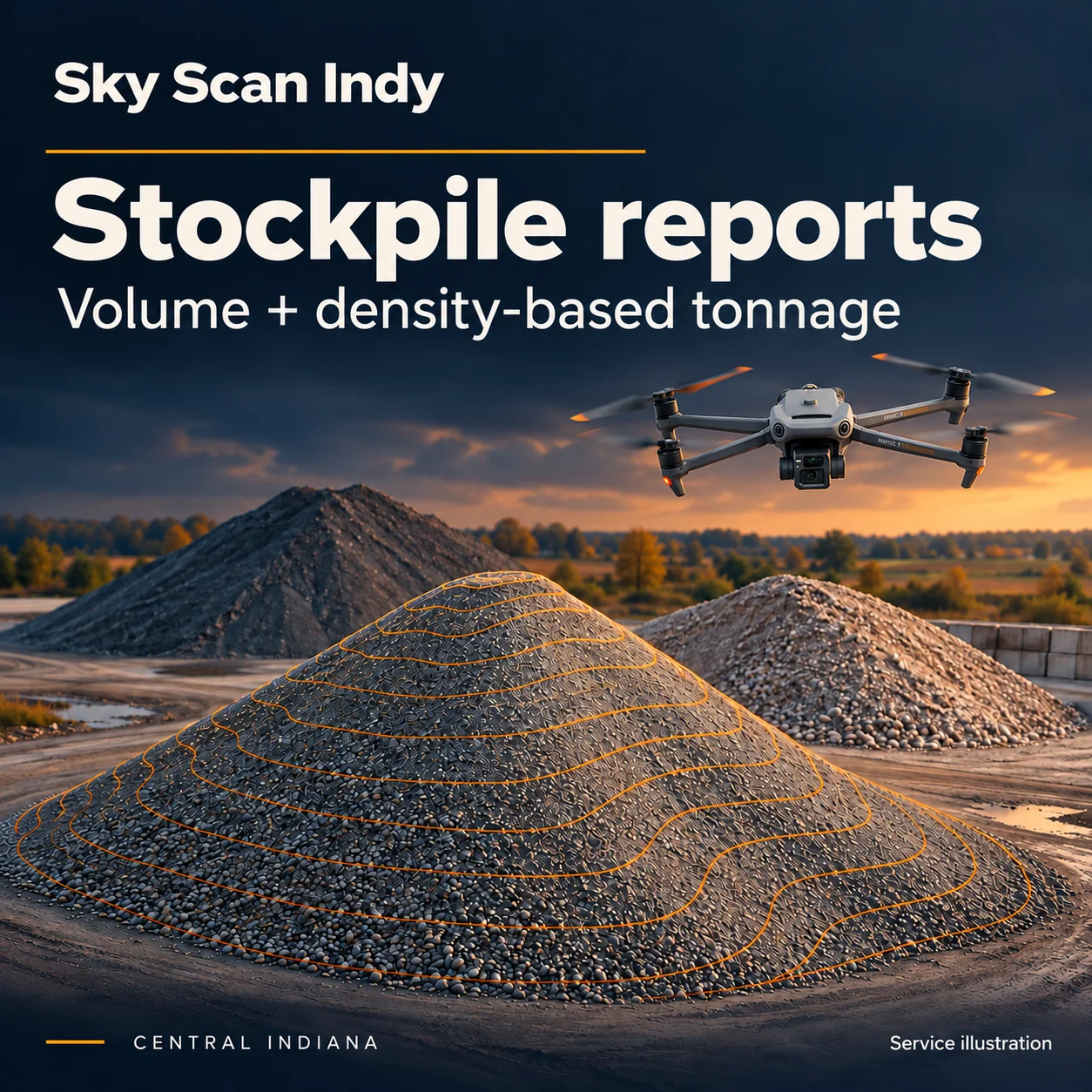
Get a practical, dated record of the material on the ground. Sky Scan Indy reports stockpile volumes in cubic yards and estimated tonnage calculated using material density, giving independent crushers, concrete recyclers, and material yards a clearer starting point for inventory conversations.
Useful for working yards
A stockpile report can support conversations about material on hand, document selected piles at a point in time, and help organize an inventory record. Start with a single visit or discuss repeat reporting as your operation changes.
Tell us how you intend to use the numbers. The useful scope for a small yard may differ from a site with several materials, changing pile boundaries, or particular reporting needs.
What the report covers
Discuss pile identification, material types, density assumptions, and any special reporting requirements before the visit. Tonnage is a calculated estimate. It is not a direct weight measurement.
- Cubic-yard volume estimates for the stockpiles in the agreed scope.
- Estimated tons calculated using the material density used for each pile.
- A dated aerial overview that puts the included piles in context.
- For repeat visits, volume comparisons where the measurements are comparable.
From yard to report
- Share the site location, approximate yard size, material types, pile count, and requested timing.
- Agree on the piles to include, reporting needs, access, and site operating conditions.
- Plan aerial capture for suitable weather, airspace, and safe conditions around the yard.
- Receive the agreed report and discuss another visit when it makes sense for your operation.
What helps us prepare a quote
Include whether you want a one-time visit or repeat reports. An approximate site size is enough to start; use acres, square feet, or rough dimensions if that is what you know. Flag active equipment, access arrangements, obstructions, connected piles, and any reporting deadline.
If you have material-density information, mention it so the basis for estimated tonnage can be discussed. It is fine to say you are not sure.
Keep the assumptions in view
Pile shape, visible edges, obstructions, the assumed base surface, and site conditions can affect volume results. Density and material condition affect estimated tonnage. Comparisons over time are useful only where the pile boundaries, base assumptions, and conditions support them.
These reports are intended for stockpile inventory. Tell us at the outset if your project has boundary, certified, survey-grade, or other specialized requirements so those needs can be reviewed separately.
Common questions
Will my report show cubic yards and tons?
The agreed report can include cubic-yard volume estimates and estimated tons calculated using material density. The tonnage figure depends on that density and the material's condition.
Can you return regularly?
We can discuss repeat visits and a reporting cadence that fits your yard. Each visit still depends on access and suitable operating conditions.
Do I need exact acreage to ask for a quote?
No. An estimate or rough dimensions are helpful. Share what you know and mark anything uncertain.
Can I compare every visit directly?
Comparisons depend on consistent boundaries, base assumptions, and suitable site conditions. We can discuss which comparisons are appropriate for your yard.
Talk through the next step.
Share the location, the result you need, and your timing. We’ll review the request and discuss a suitable scope before confirming a quote.